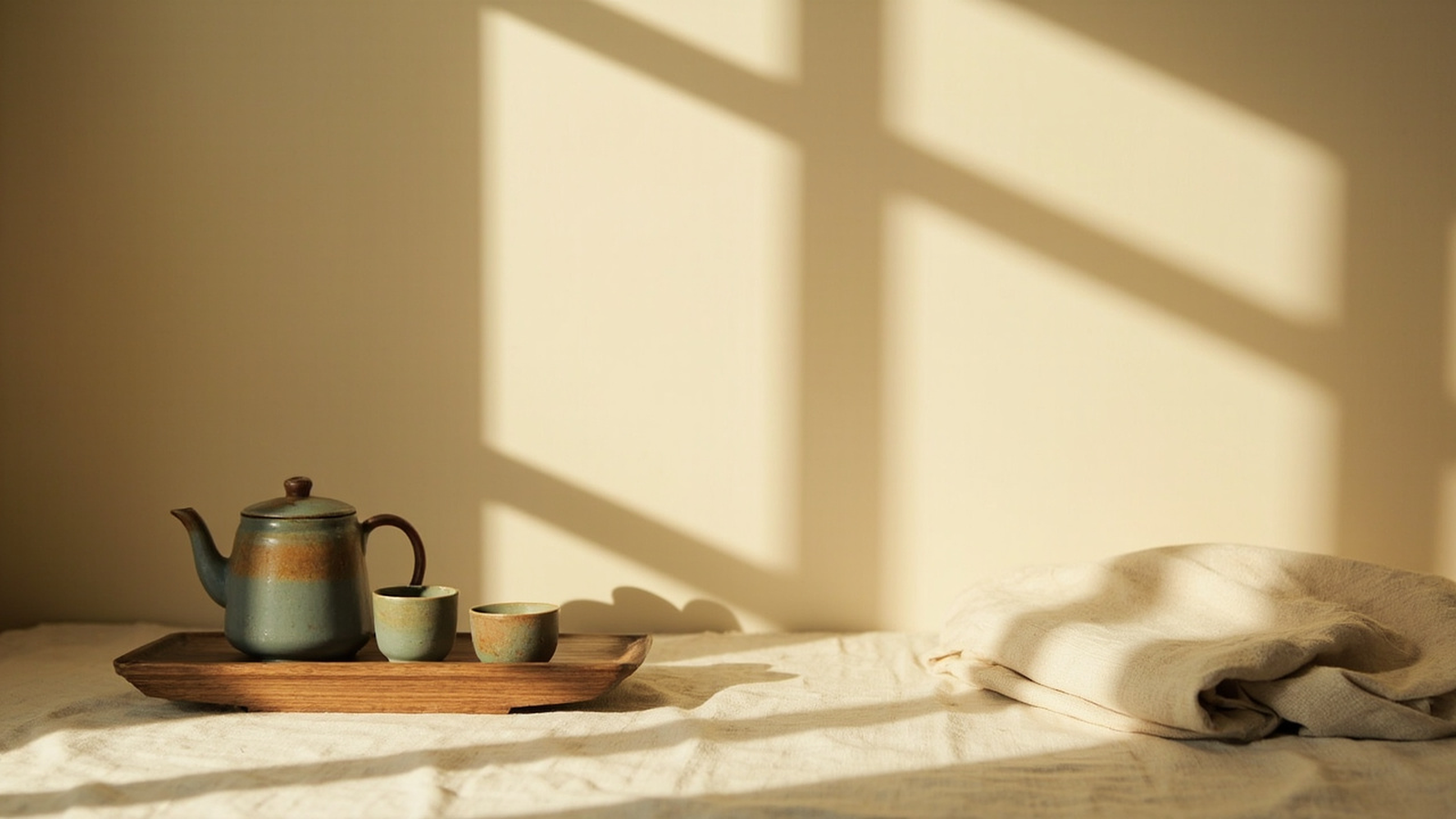
A Quiet Tea Corner
A small, intentional home tea corner designed around light, wood, and one steady ritual — japandi-leaning, wabi-sabi-aware, and meant to be built from three or four objects, not a dozen.
Why this space works
The calm comes from what is missing
Most home tea setups fail not because the objects are wrong, but because there are too many of them and they share a surface with phones, mugs, and water bottles. A quiet tea corner separates tea objects from everything else, places them within soft side light, and asks only that the reader show up once a day.
Fewer Visual Inputs
Choose one surface and only one — a corner of a shelf, a small tray, or a low side table beats a full tea cart in a small home.
Place the corner within reach of side light from a window
Overhead spotlights flatten the texture of wood and clay.
Limit the objects on the surface to four or fewer: one pot, one cup, one tray, one optional scent
Anything more becomes storage, not ritual.
Anatomy of the corner
Six sensory elements, in order of priority
A working tea corner is built from six sensory elements — light first, then surface, objects, tea, scent, and ambient sound. Each can be adjusted independently, but the order matters: light sets the room, surface sets the texture, the rest follow.
Light
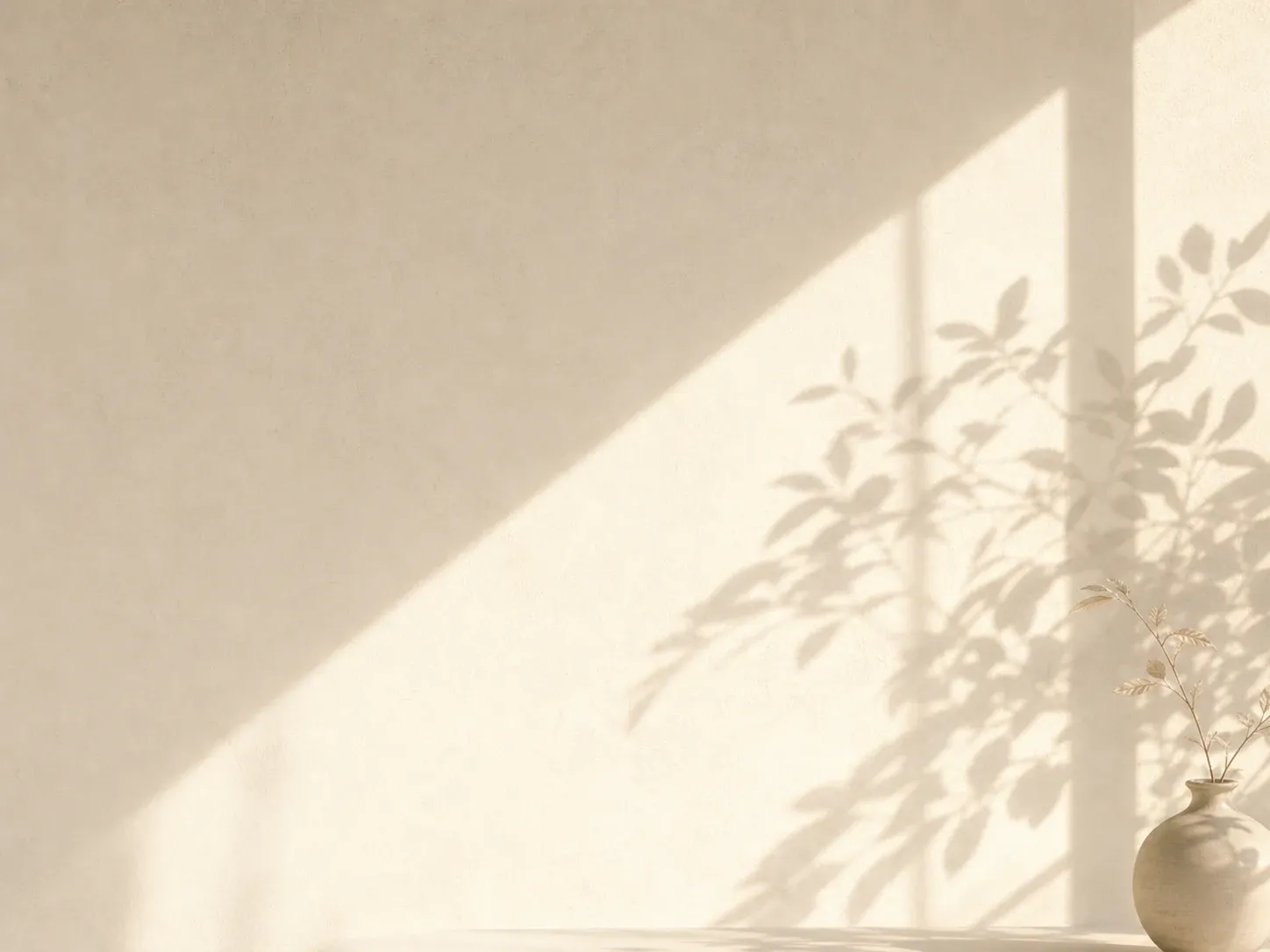
Soft Natural Light
Side light from a window
Side light from a single window one to two meters away. Avoid overhead spotlights, which flatten ceramic texture and read as office-like. A sheer curtain softens the light without darkening the corner.

surface
Natural Wood
Warm, quiet material
The corner's surface is wood or a wood tray — never glass, marble, or laminate. Wood absorbs sound slightly and warms the eye under side light, which is why tea feels different on a wood tray than on a counter.
objects
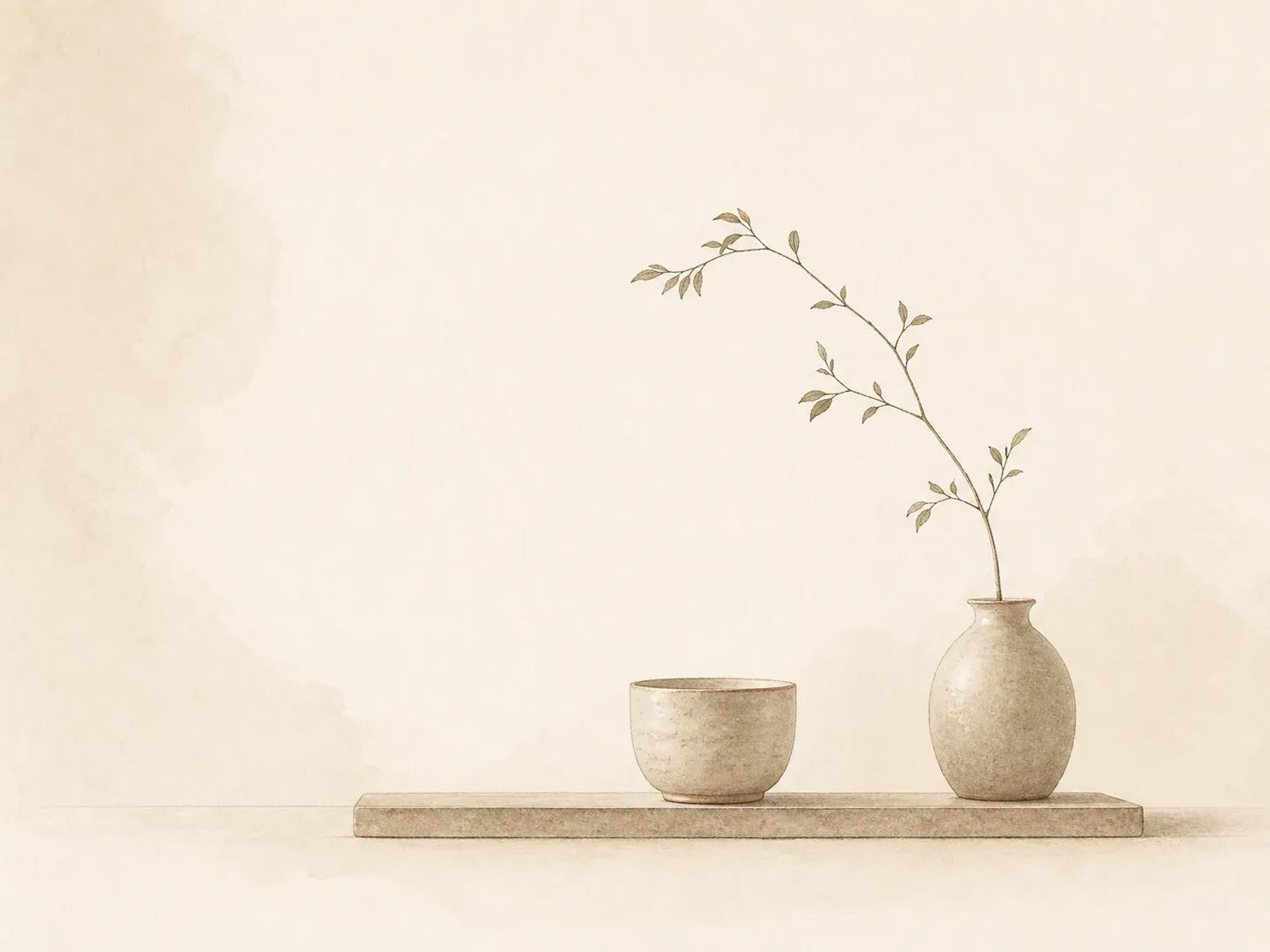
Only What You Need
One purpose per object
Four objects only. One teapot, one cup, one tray, one optional scent. Anything beyond five items is storage, not ritual. Remove anything not used in the last seven days.
Tea
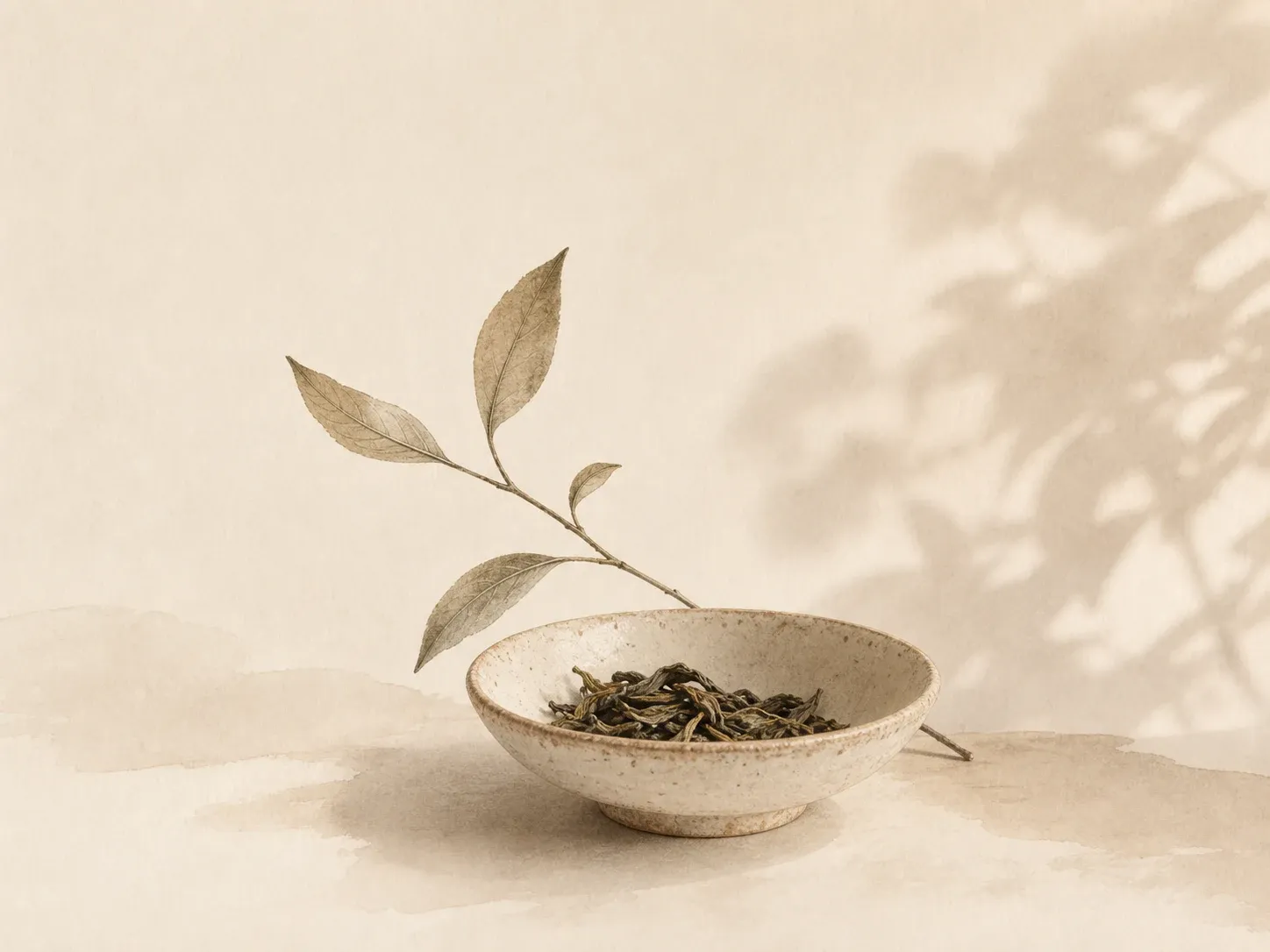
Steady Fermented Tea
Medium-bodied and warm
One tea, one source. A steady fermented tea — pu-erh, oolong, or a quiet black — anchors the corner. Mixing multiple teas in a single small space reads as indecision and undermines the ritual.
View product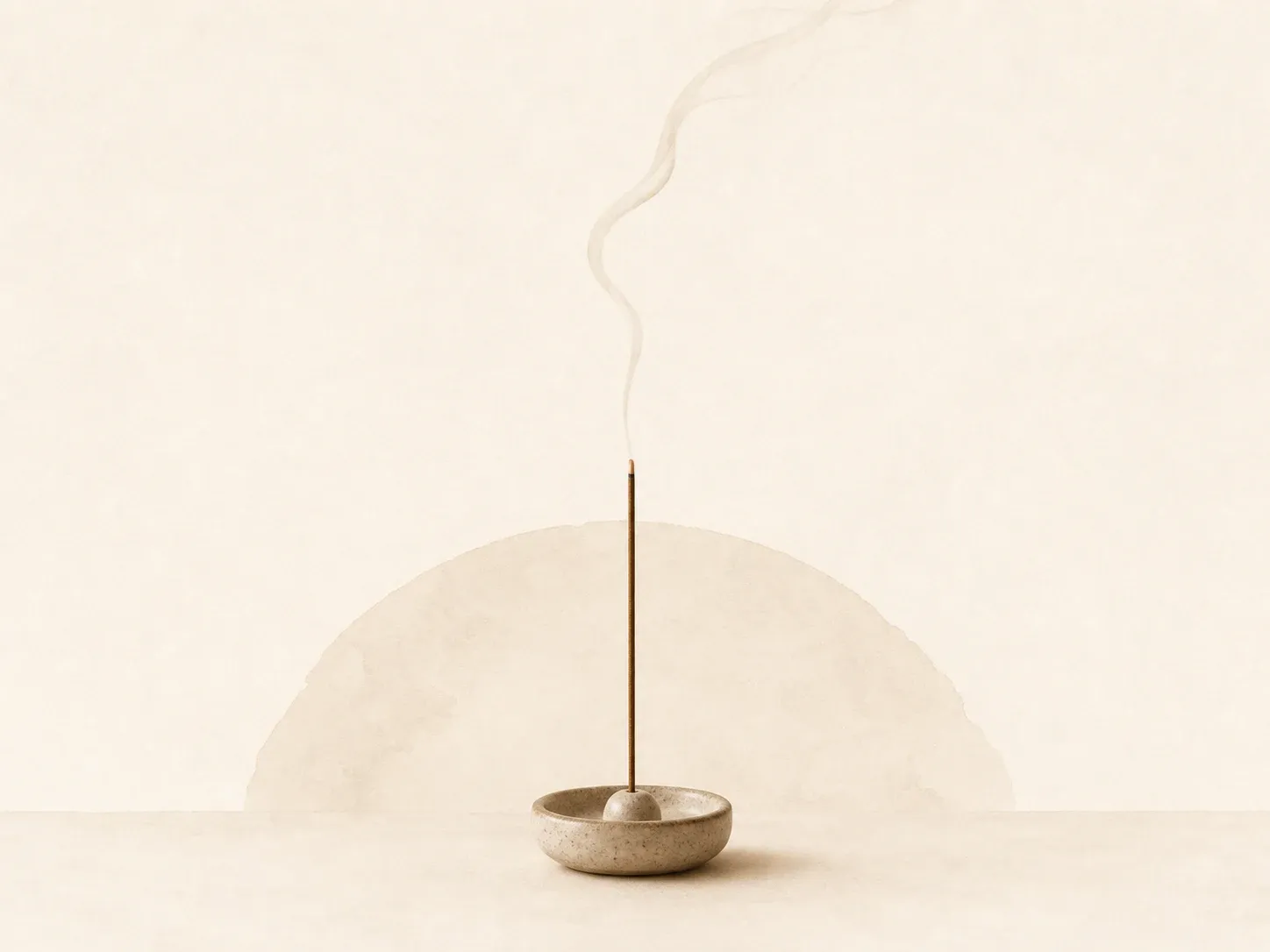
Scent
Optional Cedar Scent
Use only for transitions
A single low, slow scent source placed at table height. One thin cedar disc, not a diffuser. The scent should sit at the edge of perception — present if you breathe toward it, absent if you don't.
View product
Sound
Quiet or Natural
Continuous, low variation
Acoustic softness. The corner sits away from the kitchen extractor and the fridge. If the only available surface is in a hard-surfaced kitchen, a folded cloth on the tray absorbs enough reflected sound to change the feel.
If you only have time to adjust one thing, change the light. Side light from a single window will make the same teapot look like a different object.
Objects in this space
Four objects, four purposes
The corner below uses four objects, each with a single role. The teapot is the anchor; the tray is the surface; the cup is the moment; the cedar plate holds one optional source of scent. No duplicates. No backups. The corner does not store — it serves.

Large Handcrafted Heat-Resistant Glass Teapot
Explore this large handcrafted heat-resistant glass teapot in the available styles, sizes, and configurations.
$36.81

Draining Walnut Wood Tea Tray
Explore this draining walnut wood tea tray in the available styles, sizes, and configurations.
From $55.46

Double-Wall Glass Tumbler with Straw
Explore this double-wall glass tumbler with straw in the available styles, sizes, and configurations.
$43.66

Jingsheng Glass Gaiwan
Explore this jingsheng glass gaiwan in the available styles, sizes, and configurations.
$51.62
Related Rituals
The First Cup Ritual
A four-step morning tea ritual that uses a single small pot, a single cup, and a short steep — designed to mark the transition into a calmer day without asking for an hour.
Evening Unwind
A low-light ritual for releasing the busy pace of the day before sleep.
A Solo Reading Corner
A four-step ritual for a small reading corner built around a single cup, a fixed tray, and one slow-fermented tea — designed to mark the boundary between reading and the rest of the evening.
Related Spaces
More related paths can be added from Payload.
FAQ
Tea corner questions
Do I need a whole room for a tea corner?+
No. A quiet tea corner is defined by restraint and light, not by square footage. A single shelf near a side window, a low side table, or even one tray on a closed desk works, provided the surface only holds tea objects and is lit softly from the side.
What is the japandi approach to a tea corner?+
Japandi tea corners combine Japanese restraint (one object, one purpose) with Scandinavian warmth (light wood, soft textiles, no cold metal). The look is not decorative; it is functional. Every item earns its place by being used, not by being shown.
How many objects should a small home tea station have?+
Three to five visible objects on the surface. Typical minimal setup: one teapot, one cup, one tray, one small cloth or coaster, and one optional scent source (cedar, hojicha, or unscented wood). Anything beyond this becomes visual noise.
What kind of light works best for a tea corner?+
Soft, indirect, side light. A window with a sheer curtain one to two meters away from the corner, or a single low-wattage lamp placed at table height rather than overhead. Hard overhead light flattens ceramic and reads as office-like.
Can a tea corner work in a rented apartment?+
Yes. A tea corner should be entirely removable. A single tray you can lift and store means the corner is portable, leaves no marks, and works in any lease. Avoid wall-mounted tea shelves for rentals.